About Columbia Summer in Itoshima
Ecology and Society in Rural Japan
Columbia Summer in Itoshima: Ecology & Society in Rural Japan is an immersive, interdisciplinary field program developed by Columbia's Weatherhead East Asian Institute and Center for Undergraduate Global Engagement, with support from Unson Foundation in Fukuoka. Based in Itoshima and Yame in Fukuoka Prefecture, the program reimagines place-based learning by incorporating student self-governance and allowing students to work alongside and learn from members of rural communities.
A microcollege model in Itoshima
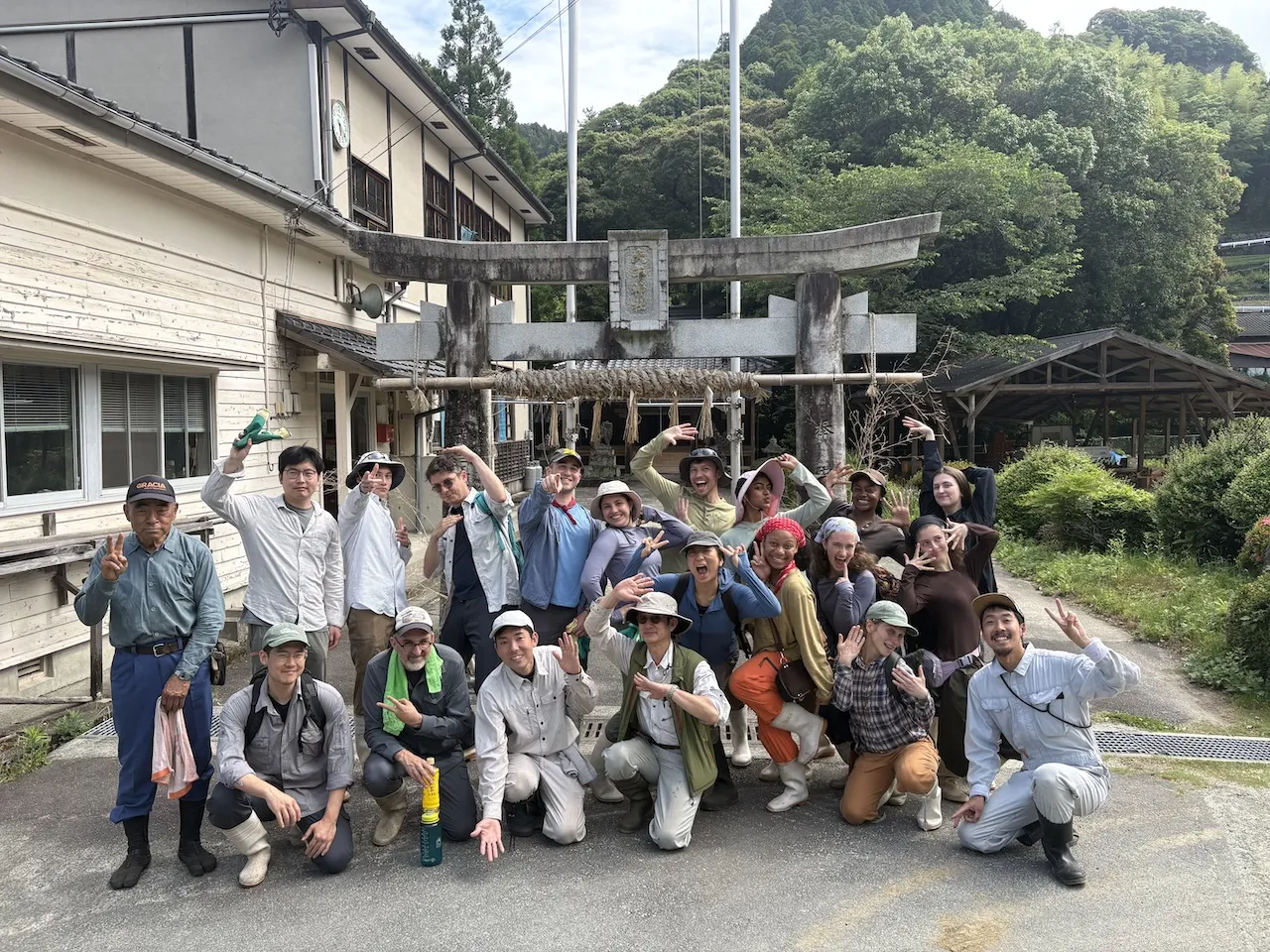
The program is structured as a small, intensive "microcollege", or a residential cohort that combines academic coursework, collaborative research, and sustained engagement with the local community. Key pedagogical influences include Deep Springs College, the Gull Island Institute and Sansonjuku, a nonprofit dedicated to rural community revitalisation that we visit during the program. For four weeks students live together in a former elementary school and then a restored farmhouse while working alongside the farmers, fishermen, foresters, and conservationists who know the region best. Other program partners include the agricultural cooperative JA Itoshima and the Fukuoka Wetland Conservation Research Group.
Teaching follows a three-part pedagogical model pioneered by Deep Springs College:
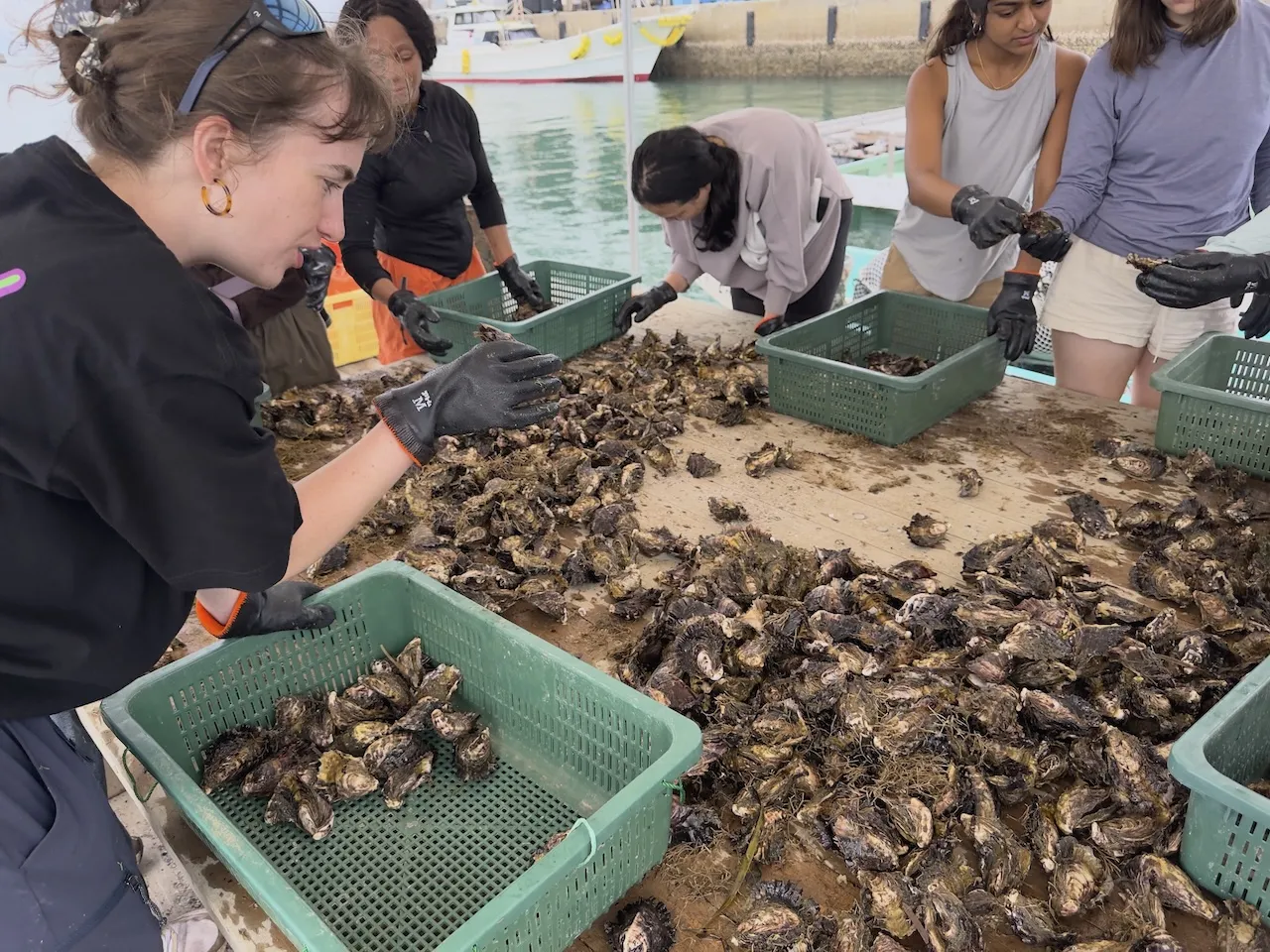
- Labor. Students learn the environment and society of Itoshima through work— cutting bamboo, planting crops, harvesting oysters, cleaning beaches—coming to understand local perspectives on land, water, and river-system governance through the body as much as the book.
- Deep reading. Students take a break from their screens to spend hours reading then discussing classic texts that draw on history, ecology, anthropology, literature, and economics to make sense of the place they are living in.
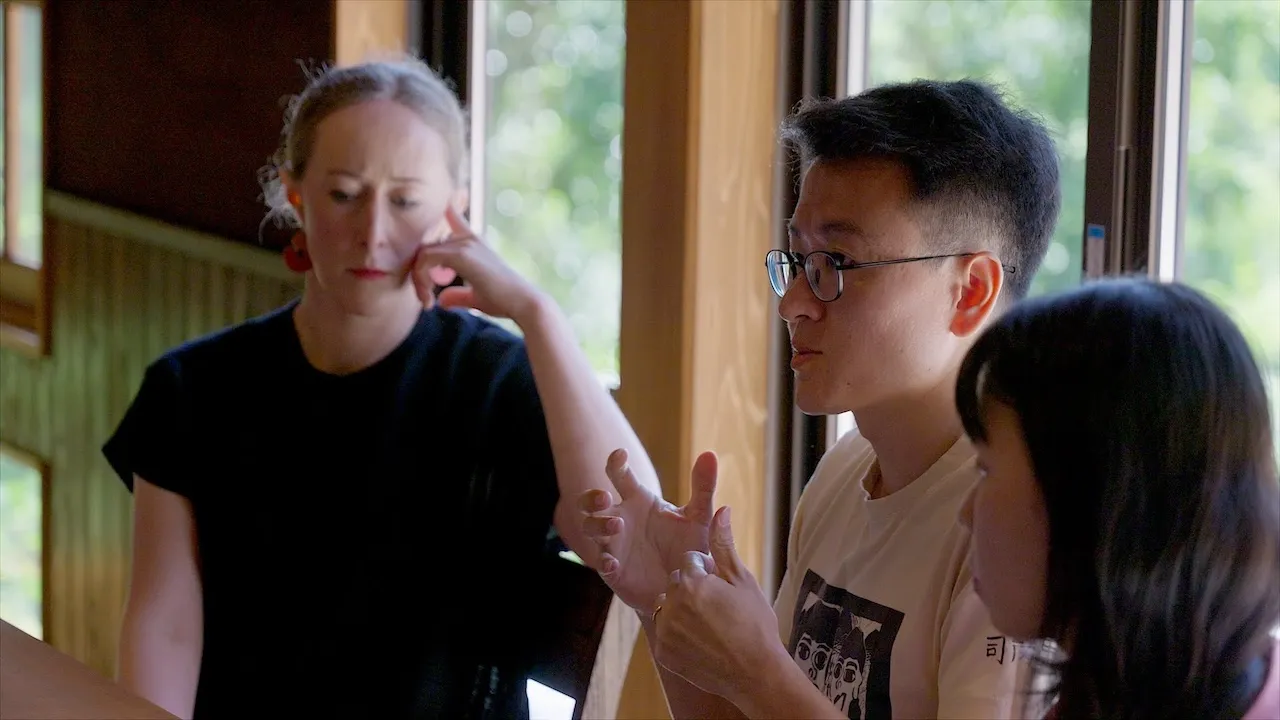
- Self governance. Students form an intentional community that collectively manages daily life—from meal-planning, cooking and cleaning to designing their final project in consultation with the instructors.
Coursework and projects take up themes such as regional ecology, global and local food systems, rural–urban relationships, intergenerational community life, and the deep history and contemporary landscape of contemporary Japan.
Place-based learning
Itoshima offers a rare setting where mountains, rivers, coastline are all close at hand. Paraphrasing a question first asked by ecologist and conservationist Aldo Leopold, students are asked to "think like a watershed": to investigate how soil, rivers, and coastal waters shape everyday life, and how human hands reshape them in turn. This in turn entails asking how local food production connects to broader economic systems, and how migration, aging, and the pull of the nearby city are remaking rural identity. Through fieldwork and dialogue with program partners, participants develop a grounded understanding of challenges to sustainability and local community resilience. As we follow the course of a watershed from the mountains over four weeks we use a variety of disciplinary approaches to explore how institutions mediate the relationship between people and places.
Teaching, research, and engagement
The program is part of a larger Columbia initiative to build long-term educational and research infrastructure in the region. Across its activities, the initiative integrates four core aims:
- Teaching — interdisciplinary, place-based education for undergraduate and graduate students
- Research — collaborative scholarship on ecology, society, and long-term wellbeing
- Engagement — partnerships with local communities, institutions, and practitioners
- Measurement & archiving — documenting environmental and social change to support inquiry over the long term
By bringing together students, faculty, researchers, and community partners, the program aims to create a sustained platform for learning from rural Japan while contributing to broader conversations about environmental futures, social resilience, and global interdependence.
A new initiative at Columbia
As a pilot program, Columbia Summer in Itoshima is the first stage in a project to promote forms of place-based education that link the humanities, social sciences, and environmental studies. It sets out to cultivate a generation of students who can think across disciplines, work collaboratively, and engage responsibly with the communities and ecosystems that shape our shared future.
Columbia Summer in Itoshima is supported by Unson Foundation, a philanthropic organization based in Itoshima that studies the most pressing social and environmental challenges generated by global capitalism and works to build new social systems that foster long-term human wellbeing.