CSI is in The Asahi Shimbun!
Columbia Summer in Itoshima has been featured in The Asahi Shimbun, one of Japan's leading broadsheet newspapers. Editorial writer Wataru Sawamura visited the program during its inaugural pilot this summer and has written about the experience in his weekly column. You can read the original article here and an English translation below.
From New York to Itoshima: A Journey to Rebuild a Sense of Place in an Age of Globalization
September 20, 2026, 10.00am
Wataru Sawamura
This summer, I found myself thinking about “place.”
Globalization has freed people from the constraints of geography. And yet, we still long for places where we can feel where we belong and with whom we share our lives.
Families, workplaces, local communities—the places that accept us and connect us with others are becoming more fragile. Meanwhile, spaces that exclude those who are different are proliferating. Yet there are also efforts to rebuild places that remain open to others.
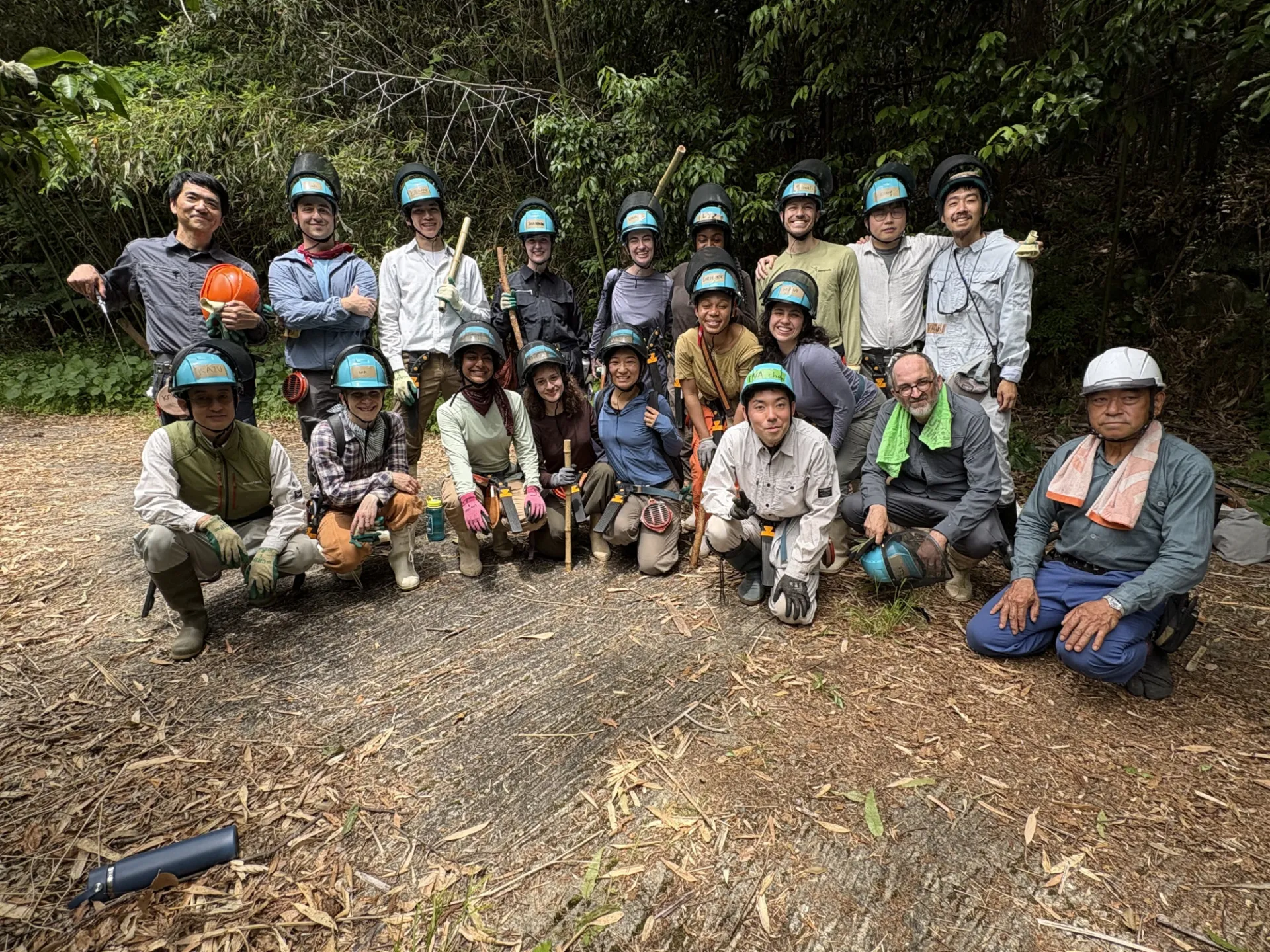
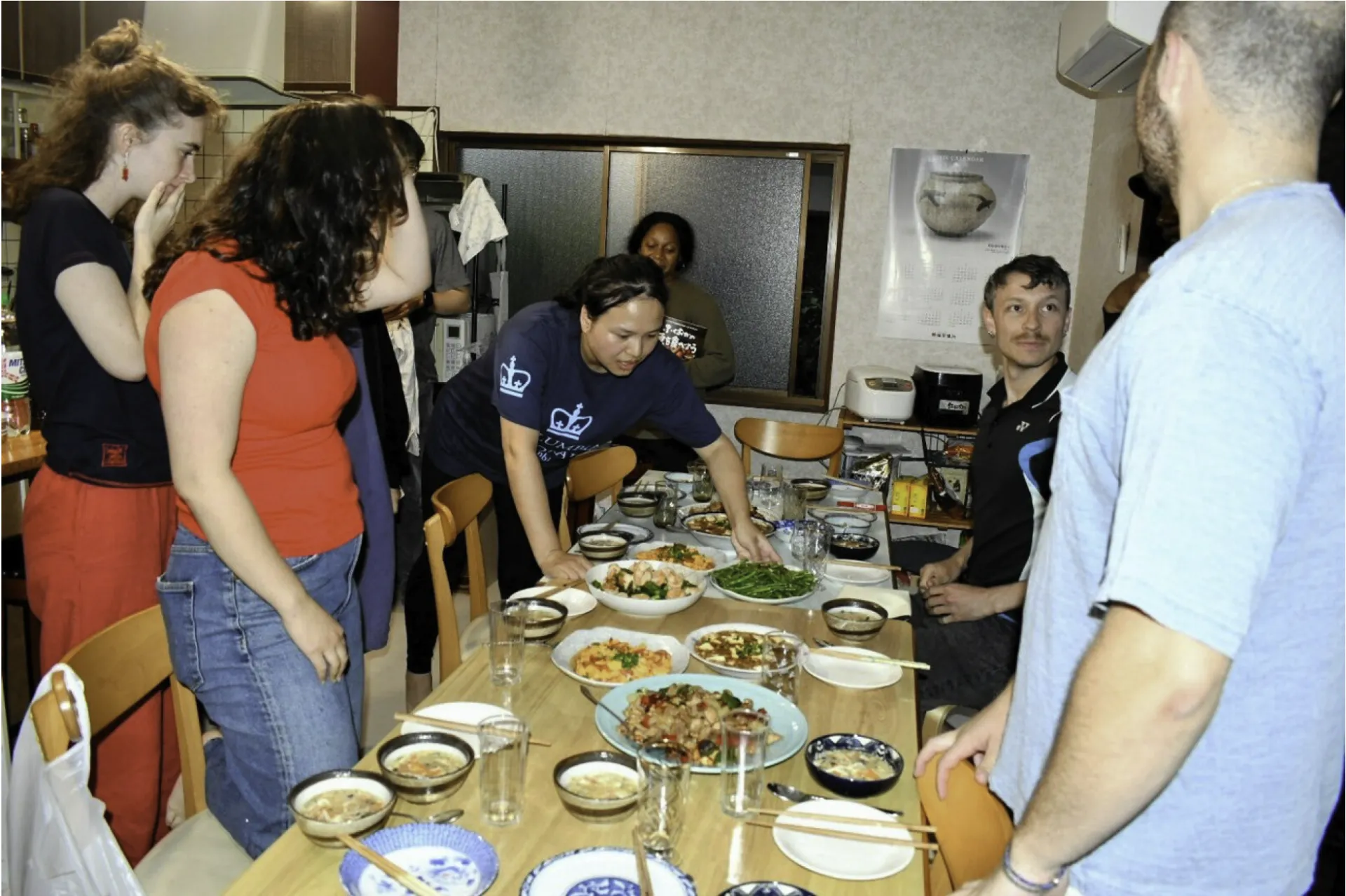
At the beginning of this summer, thirteen students from Columbia University spent seventeen days together in Japan. They chose Itoshima, a city in Fukuoka Prefecture where farming, forestry, fishing, and everyday life remain closely interconnected, as the base for their learning. This was not a research field trip. They were given three tasks: “physical labor”—tending forests, planting sweet potatoes, and sorting oysters; “deep reading”—putting away their smartphones and engaging with books; and “shared self-governance”—discussing and collectively deciding how to handle cooking, cleaning, and the practical issues of communal life.
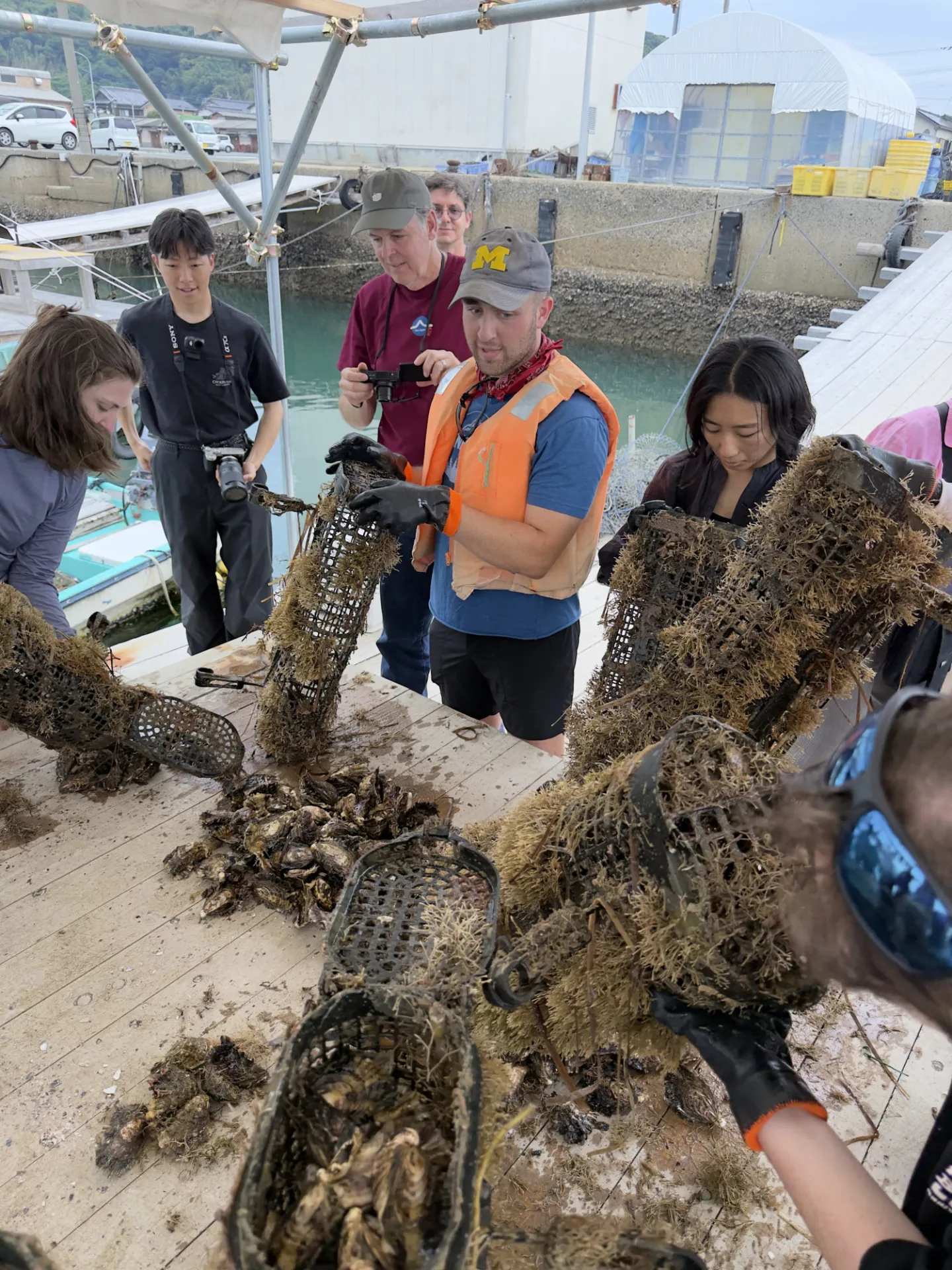
It was an experiment in stepping away from classrooms, social media, and AI, and instead working with their hands, meeting people face to face, and building a relationship with the land. Paul Kreitman, the faculty member leading the program, calls it “place-based education.”
The students normally study at one of America’s leading universities, in New York. They might seem like young people capable of moving effortlessly across the world. Yet perhaps they, too, are searching for firmer ground on which to stand.
Elizabeth Adeoye, 21, has grown up with a sense that “something bad is coming.” Climate change, the COVID-19 pandemic, AI, social division. Reading The New York Times in the morning makes her anxious. Not reading it leaves her uneasy, as though she were turning away from reality.
In Itoshima, she experienced a different sense of time. She cut bamboo and pulled weeds. Her body was tired, but “my mind wasn’t tired.” Meeting someone who had left a salaried job to become a farmer helped her realize that “life is not a single, straight path.”
Ayano Ishimura, 23, was struck by the words, “It takes three generations to grow a forest.” In New York, success and work tend to be considered within the timeframe of “my own life.” In a forest, however, the work one begins is passed on to the next generation. From the land to rivers and then to the sea, she also came to appreciate the cycles linking nature and human activity.
Are these students alone in their longing for a sense of place?
I was reminded of Patrick Deneen, an American political scientist I once interviewed. He has argued that liberalism, in its pursuit of individual freedom, has detached people from tradition and local communities, weakening the spaces that once existed between the individual and the state.
His critique has resonated among conservatives. In the United States today, a growing number of young people are turning to religion as an anchor for a stronger sense of national belonging. The thirst for a sense of place can also exist uncomfortably close to exclusionary nationalism.
There are also people in the United States whose places of belonging have historically been taken from them: Indigenous peoples, as well as the descendants of Africans who were brought to the country as slaves and bought and sold.
I contacted photographer Kenji Kawano, 77, for the first time in nearly thirty years. He has lived on the Navajo reservation since 1974 and has spent half a century photographing the Navajo people. The Navajo Nation has its own government and a reservation extending across three states in the American West.
Kawano also took part in protests against an oil pipeline planned near Indigenous lands. He traveled through the snow to the protest site with Navajo U.S. military veterans. “We don’t want that kind of pipeline running through our land,” he recalled. Land is not merely property or a resource. It is also a place in which memory, faith, and language reside.
Of course, the meaning and weight of “place” differ from person to person.
Back in New York, Adeoye has begun quietly reading books in parks. She also cooks with friends. Changing the world may be difficult. But it is possible to change the ground beneath one’s own feet.
This article was originally published in Japanese in The Asahi Shimbun on September 20, 2026, as part of editorial writer Wataru Sawamura's Sunday column, "Nichiyō ni omou" (Thinking on Sunday). You can read the original article (paywalled) here.